Your Ultimate Guide to Fishing Forecasts: How to Read, Use, and Catch More Fish
Ever wondered why some anglers always seem to catch fish while you come home empty-handed? The secret often lies in understanding and using a fishing forecast. This ultimate guide breaks down everything from solunar tables and water temperature to the best apps and websites, giving you the knowledge to plan your perfect fishing trip.
Quick Navigation
- What is a Fishing Forecast, Really?
- The Core Components of a Reliable Fishing Forecast
- How to Actually Read and Use a Fishing Forecast
- Top Fishing Forecast Websites & Apps: A Side-by-Side Look
- Common Questions & Misconceptions About Fishing Forecasts
- Putting It All Together: Your Pre-Trip Planning Routine
- The Final Cast
Let's be honest. We've all had those days on the water. You wake up before dawn, drive for hours, launch the boat with high hopes, and then... nothing. Not a nibble. Meanwhile, you see another angler a few coves over hauling them in one after another. What's their secret? Luck? Maybe sometimes. But more often than not, the difference between a skunk and a slam is a little thing called a fishing forecast.
I used to think these forecasts were just gimmicks. A bunch of fancy charts for people who overthink fishing. Then, after one too many frustrating trips, I decided to actually learn how they work. The change wasn't overnight, but slowly, I started connecting the dots. The days I paid attention to the forecast were, consistently, better days. It's not magic—it's just applied science and observation.
This guide is everything I wish I'd known years ago. We're going to strip away the mystery. We'll look at what a fishing forecast actually is, how to read the numbers and graphs that matter, where to find the best information, and most importantly, how to use it to make real decisions that put fish in your cooler.
What is a Fishing Forecast, Really?
It's not a crystal ball. A fishing forecast is a predictive tool that synthesizes various environmental and astronomical data to estimate fish activity levels. Think of it less as a guarantee and more as a probability report. It tells you when the odds are stacked in your favor.
The core idea is simple: fish are creatures of instinct, heavily influenced by their environment. A good forecast analyzes the factors that trigger feeding behavior. It's the combination of these factors that creates those legendary "hot bites."
Some forecasts are incredibly detailed, giving you an hour-by-hour score. Others are more general. But they all aim to answer the angler's eternal question: Is today a good day to fish?
The Core Components of a Reliable Fishing Forecast
To trust a forecast, you need to know what's going into it. Here are the big pieces of the puzzle. Not every forecast uses all of them, but the best ones integrate most.
1. Solunar Theory & Moon Phases
This is the granddaddy of fishing prediction. The theory, popularized by John Alden Knight in the 1930s, suggests that the positions of the sun and moon ("sol" and "lunar") create gravitational pulses that affect wildlife activity, including fish feeding. The key periods are:
- Major Periods: When the moon is directly overhead or underfoot. Typically last about 2 hours.
- Minor Periods: When the moon is at 90 degrees (rising or setting). Shorter, usually 1 hour.
The phase of the moon amplifies this. Many anglers swear that fishing is best during the new moon and full moon, when the sun, earth, and moon are aligned, creating stronger gravitational tides. The data from sources like the NOAA Tides & Currents website certainly shows a correlation between these phases and stronger tidal movement in coastal areas, which directly stimulates feeding.
Is it perfect? No.
But ignoring the moon is like ignoring the weather. It's a fundamental background rhythm.
2. Weather & Barometric Pressure
This is where things get immediate. Fish have a swim bladder—an internal air sac. Changes in atmospheric pressure (barometric pressure) affect that bladder, causing discomfort or changing their buoyancy. This directly impacts their mood and willingness to feed.
Other weather bits matter too. A sudden cold front shuts things down. A warm front can perk them up. Wind direction and intensity can push baitfish and affect water temperature. A good fishing weather forecast looks at all this.
3. Water Conditions: Temperature & Dissolved Oxygen
This is non-negotiable. Fish are cold-blooded. Their metabolism, and thus their activity level, is dictated by water temperature. Every species has a preferred range. Trout like it cold (50-60°F). Largemouth bass get active in the mid-70s. Knowing the temp tells you where fish will be (deep vs. shallow) and how aggressively they'll feed.
Dissolved Oxygen (DO) is the other silent player. Water holds oxygen, and fish need it to breathe. Stagnant, warm, algae-filled water has low DO, making fish sluggish. Moving water, wind-driven waves, and cooler temps mean higher DO and more active fish. You can sometimes find local DO readings from environmental monitoring stations, like those run by the U.S. Geological Survey (USGS).
4. Tidal Movement (For Saltwater & Tidal Rivers)
If you fish in saltwater, tides are your primary clock. Moving water is life. It carries food, stirs up the bottom, and allows predators to ambush prey. The classic saying is "No tide, no bite."
A fishing forecast for coastal areas is useless without accurate tide predictions. You need to know the times of high and low slack water, and the speed of the incoming (flood) and outgoing (ebb) tides. The hour before and after a tide change is often peak time. Again, NOAA is the gold standard for U.S. tidal data.
How to Actually Read and Use a Fishing Forecast
Okay, so you have a forecast in front of you. It's got numbers, graphs, maybe a fish icon with a score of 7/10. What now?
First, don't just look at the overall score. Dig into the components. A high score because of perfect solunar timing might be undermined by a crashing barometer. Conversely, a mediocre overall score with a perfect water temperature window might be your best bet.
Here’s my mental checklist when I check a forecast:
- Identify the Prime Window: When is the peak solunar period? Does it overlap with dawn or dusk (naturally good times)?
- Check the Weather Trend: Is pressure stable, rising, or falling? What's the wind doing? Will it be manageable?
- Consider Water Temp: Is it in the ideal range for my target species? Has it been stable?
- Plan My Tactics: High-activity forecast? I might throw aggressive reaction baits (crankbaits, spinnerbaits). Low-activity forecast? I'm slowing way down with finesse techniques (drop shot, ned rig).
Let me give you a real example from last spring. The fishing forecast for my local lake showed a major morning period from 7:00-9:00 AM, with a minor one around noon. But a strong cold front was due to hit at 10 AM. The forecast score was only a 6 because of the impending front. I knew the pre-frontal bite could be crazy. I hit the water at 6:30, found a wind-blown point, and had the best two hours of topwater bass fishing I've had all year. The front hit, and it died completely by 10:30. The forecast told the story—I just had to interpret the chapters.
Top Fishing Forecast Websites & Apps: A Side-by-Side Look
Where do you get this info? There are dozens of sources, from simple apps to complex websites. I've tried most of them. Here’s a breakdown of the ones I keep coming back to.
| Tool | Best For | Key Features | My Take / Drawback |
|---|---|---|---|
| SolunarForecast.com | Pure solunar data & simplicity. | Clean daily/hourly charts, major/minor times, moon phase/rise/set. Free and ad-supported. | My go-to for a quick, no-fuss check. It does one thing well. Lacks weather integration, so you have to cross-reference. |
| Fishbrain App | Community-driven insights & local trends. | Combines solunar data with hyper-local catch reports, water temp logs from users, and a social platform. | Incredible for seeing what's actually being caught near you right now. The forecast is decent, but the real-time data is the killer feature. Requires a premium subscription for best features. |
| AccuWeather & Windy.com | Hyper-detailed weather forecasting. | Precise barometric pressure graphs, wind speed/direction models, precipitation radar, water temperature maps. | Not a "fishing forecast" per se, but essential tools for the weather component. Windy.com is phenomenal for visualizing wind and pressure waves. You have to build the fishing picture yourself. |
| My Fishing Advisor | All-in-one integrated forecast. | Blends solunar, weather (pressure, wind), and water temp into a single 1-10 score. Has species-specific advice. | Probably the most comprehensive free fishing forecast website. The interface is a bit cluttered, but the data synthesis is excellent. It feels like it's made by anglers. |
| Old-School Tide Chart (e.g., NOAA) | Saltwater & tidal river accuracy. | Official, reliable tide predictions and current flows. The source all other apps pull from. | No frills, just absolute authority. You can't beat it for tidal planning. It's a reference tool, not a polished forecast. |
My personal setup? I start with SolunarForecast to note the prime times, then cross-check with Windy.com for the pressure and wind forecast, and finally peek at Fishbrain to see if anyone's been catching. It takes 5 minutes and gives me a 90% confident picture.
Common Questions & Misconceptions About Fishing Forecasts
Let's tackle some of the stuff that trips people up.
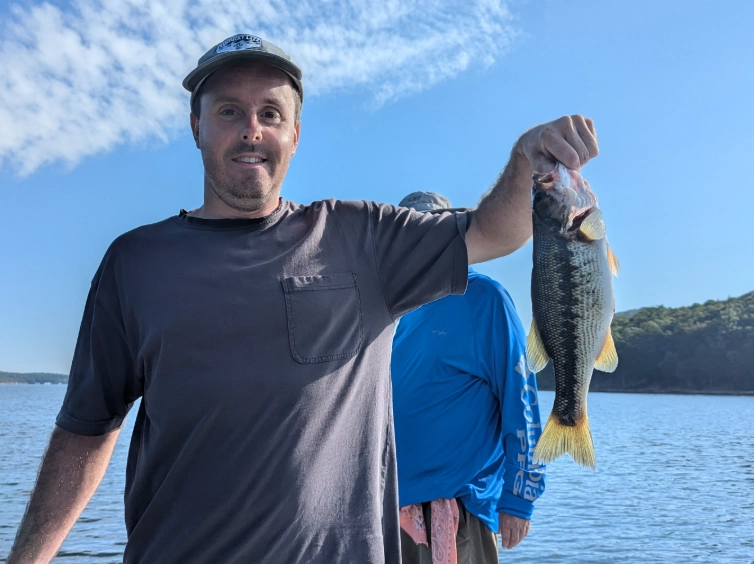
- Bass Fishing: Extremely responsive to solunar periods and pressure changes. A major period near cover is money.
- Trout Fishing: Water temperature and dissolved oxygen are king. A forecast is less about "when" and more about "if" the conditions are even suitable for trout to be active.
- Offshore/Saltwater: Tides are paramount, followed by moon phase (for species like snook, tarpon). The forecast helps pick which tide to fish.
- Ice Fishing: Barometric pressure is the star of the show here, along with light penetration (cloud cover). Solunar times still seem to hold under the ice.
Putting It All Together: Your Pre-Trip Planning Routine
Here’s a simple routine you can follow. Do this the night before your trip.
Step 1: The Big Picture Check. Pull up your preferred fishing forecast app or website. Look at the overall score for your location and tomorrow's date. Note the best-rated hours. Don't just look at the peak; see the whole curve of the day.
Step 2: The Weather Deep Dive. Open a detailed weather app. Check the hourly graph for barometric pressure. Is it flat, rising, or falling? What's the wind doing during your prime fishing window? Will it be a chop or a blow-out?
Step 3: The Local Intel. If you use an app like Fishbrain, take 2 minutes to scroll recent catches in your target body of water. Are people catching? On what? This isn't cheating—it's scouting.
Step 4: Make the Game Plan. Synthesize it. If the prime solunar window is at 10 AM but the wind is going to howl at 20 mph from the north at that time, maybe you plan to fish a sheltered southern cove. If pressure is crashing all morning, maybe you commit to reaction baits early. Write down your plan: where you'll start, what techniques you'll try first during the peak period.
This routine takes 10 minutes.
It turns you from someone just going fishing into someone strategically planning a fishing trip. The difference in your mindset—and your results—is profound.
The Final Cast
A fishing forecast isn't a cheat code. It won't make fish jump in your boat. What it does is stack the deck in your favor. It takes one massive variable—timing—and gives you data to manage it. In a sport where we can't control the fish, the weather, or the water, it feels good to control what we can: our presence during the most promising times.
Start using one. Not blindly, but thoughtfully. Cross-reference a couple of sources. Pay attention to what the different parameters mean. Keep a simple log: date, forecast score/conditions, and your result. Over time, you'll see the patterns for yourself, on your water, for your target fish.
You'll still have slow days. That's fishing. But you'll have fewer of those bewildering, "why-is-nothing-biting?" days. And you'll have more of those days where you smile, look at the sky, and think, "Yep. The forecast said it would be like this." And then you set the hook.