The Ultimate Guide to Fishing Etiquette: Rules for a Better Day on the Water
What are the unwritten rules that make or break your fishing trip? This complete fishing etiquette guide covers everything from space and noise to handling fish and protecting the environment for both beginners and seasoned anglers.
Quick Navigation
- The Golden Rules: Space, Noise, and Common Courtesy
- Handling Fish and Gear: Do No Harm
- Boat Ramp and Access Area Etiquette
- Different Waters, Different Rules
- The Catch & Keep vs. Catch & Release Dynamic
- Sharing Information (or Not)
- Common Fishing Etiquette Scenarios: What Would You Do?
- Beyond the Basics: The Philosophy of Good Angling
- Answers to Questions You Might Be Hesitant to Ask
Let's be honest. You can know every knot, own the fanciest gear, and have the secret lure, but if you don't understand fishing etiquette, you're going to be that guy. You know the one. The person everyone on the pier, bank, or boat is silently (or not so silently) groaning about.
I learned this the hard way years ago on a crowded trout stream. I was young, eager, and completely clueless. I waded right through a pool another angler was clearly working, my line tangling with his on a backcast. The look he gave me wasn't anger, it was pure, unadulterated disappointment. I ruined his morning, and I certainly didn't catch anything myself. That day taught me more about fishing than a dozen guide books. Fishing etiquette isn't about stuffy rules; it's about respect. Respect for other people, for the fish, and for the places we're lucky enough to fish in.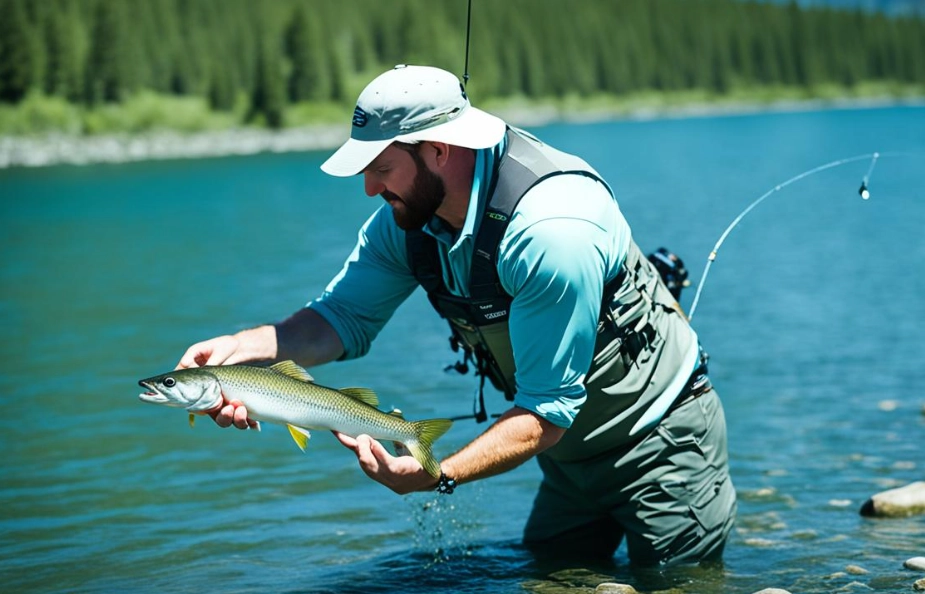
At its core, good fishing etiquette is what transforms a potentially frustrating free-for-all into a peaceful, enjoyable, and sustainable experience for everyone involved. It's the difference between a good day on the water and a story you tell later about "that jerk who…"
The Golden Rules: Space, Noise, and Common Courtesy
This is where most conflicts start. How close is too close? The answer, frustratingly, is: it depends. But there are some solid guidelines.
On a wide-open beach or large lake from a boat, giving others a wide berth is easy. The trouble starts in confined spaces like rivers, small streams, or crowded piers. For fly fishing on a river, the general rule is to give an angler at least the length of two good casts downstream and the same distance upstream. If you see someone working a run, don't just jump in above them. River currents carry your scent and disturbance downstream, spooking the fish they're targeting. It's like someone turning on a blender while you're trying to have a conversation.
On a stocked pond or busy bank, use your eyes. If there's a visible gap, it's probably there for a reason. Always, and I mean always, ask if you're unsure. A simple "Mind if I fish down there?" goes an incredibly long way. Most anglers will be fine with it if you ask politely. It's the surprise invasion that ticks people off.
Now, let's talk noise. Fish feel vibrations. They're not deaf. Loud conversations, blaring music, slamming car doors, or stomping along the bank can put down fish in a shallow area. Keep your voice at a reasonable level. This isn't a library, but it's not a tailgate party either. If you're with buddies and having a laugh, just be mindful of your volume, especially if you see others nearby who were there first.
And then there's just basic human decency. Don't litter. Ever. If you see trash, pick it up even if it's not yours. It's our collective home. Control your kids and dogs if they're with you. A loose dog bounding into the water where someone is fishing is a surefire way to ruin their concentration.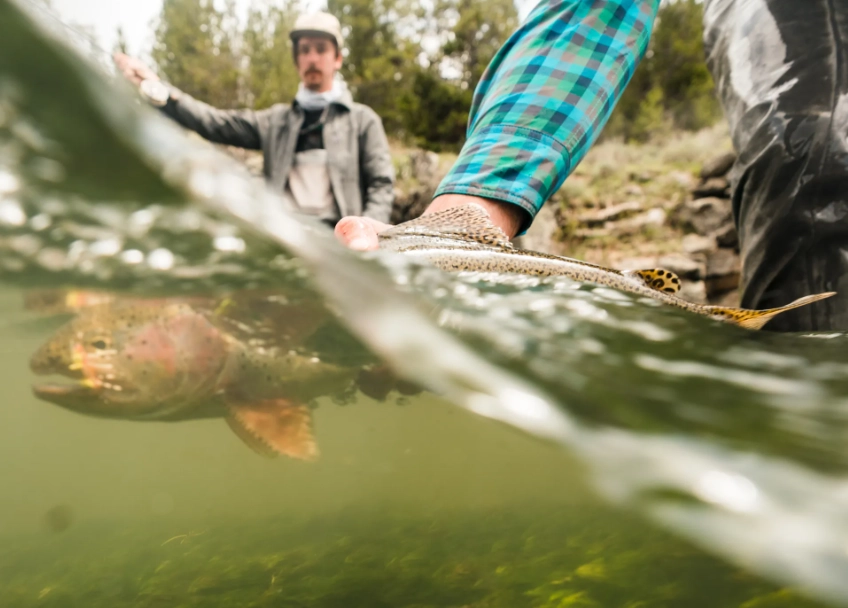
Handling Fish and Gear: Do No Harm
This part of fishing etiquette is less about other people and more about the resource itself. If you're practicing catch and release, your job isn't over when the fish is hooked. Your job is to get it back in the water healthy.
First, use appropriate gear. Don't use ultralight tackle on big fish if you plan to release them. It exhausts them to death. Land the fish as quickly as you reasonably can. Have your tools ready—pliers, hemostats, a wet net with rubberized mesh (not knotted string, which removes slime).
Keep the fish in the water if you can. Unhook it there. If you need a photo, wet your hands first. Dry hands remove the fish's protective slime coat, leaving it vulnerable to infection. Don't squeeze it. Support its body horizontally—never hold a large fish vertically by the jaw alone, as this can damage its internal organs. The Pennsylvania Fish and Boat Commission has excellent visual guides on proper handling for different species.
If you must lift it, do it quickly, get your shot, and gently return it. Revive the fish by holding it upright in the water, facing into a current if there is one, until it swims away under its own power. Don't just toss it back.
For gear, be mindful of your backcast. Look behind you. I've been hooked by a careless caster, and it's not fun. It's dangerous. On a boat, don't be a line tangler. Keep your area tidy. A messy deck is a trip hazard and slows everyone down.
Boat Ramp and Access Area Etiquette
This deserves its own section because boat ramps on a Saturday morning can be a special kind of hell. Tempers flare. The key here is preparation and efficiency.
Do your prep work in the parking lot or staging area, NOT on the ramp. Load all your gear, attach your lines, install your drain plug (a classic mistake!), put in your cooler—do all of this before you get in line for the ramp. When it's your turn, you should be ready to back down, launch, and move your vehicle out of the way in minutes.
Have your driver and crew communicate clearly. Use hand signals if it's noisy. Once the boat is off, immediately pull your vehicle and trailer to the designated parking area. The reverse is true when loading. Pull your boat to the dock, have your driver get the vehicle, and load quickly. Pull away from the ramp to secure straps and stow gear.
Be helpful if you can. Offer to catch a line for someone solo launching. A little kindness here makes the whole process smoother for everyone. The Take Me Fishing website has some great, simple checklists for ramp preparedness that are worth a look for beginners.
Different Waters, Different Rules
Fishing etiquette isn't one-size-fits-all. A stocked urban pond has a different vibe than a remote wilderness trout stream.
On a Pier, Jetty, or Beach
Space is linear. Cast parallel to the structure, not perpendicular across everyone else's lines. If you're bait fishing with a heavy sinker, be extra careful on the backswing—it's a lethal weapon. Keep your gear consolidated. Don't spread out five rods and a cooler, claiming 20 feet of prime real estate for just yourself.
On a River or Stream (Wading)
This is where the "walking upstream" rule generally applies. Anglers work upstream, so new anglers should start at the tail of a pool below others. Never walk through a pool or run someone is actively fishing. Go around, far back on the bank. Respect the upstream angler's water.
From a Boat
Don't motor full-speed through areas people are fishing (this is often actually a law, creating an illegal wake). Slow down to a no-wake speed. Don't anchor right on top of someone. If you see a boat drifting a shoreline, give them space. Don't cut in front of their drift path. It's like cutting in line.
Ice Fishing
Don't set up your shanty right next to someone else's without asking. The sound of your auger drilling through the ice transmits for a long way underwater and can spook fish. Be considerate with distance.
The Catch & Keep vs. Catch & Release Dynamic
This can be a touchy subject. My personal view? You do you, within the legal limits. But etiquette plays a role here too.
If you're keeping fish, kill them quickly and humanely. Don't let them flop in a dry cooler. Use a priest (a small club) or an iki spike. Get them on ice immediately to preserve meat quality. It's more respectful to the animal, and it results in better eating.
If you're practicing catch and release, don't judge the person keeping their legal limit. Conversely, if you're keeping fish, don't make snide comments to the person releasing them. As long as everyone is following the regulations, it's a personal choice. The problems start when someone is illegally harvesting undersized fish or over their limit—that's not an etiquette issue, that's a poaching issue, and it should be reported.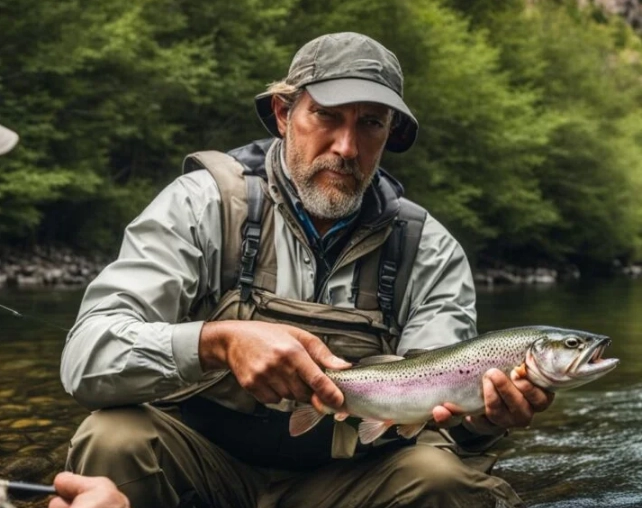
Sharing Information (or Not)
This is a gray area. Are you obligated to tell a stranger what you're using? No. Absolutely not. But is it a nice thing to do, especially to a kid or a clearly struggling beginner? Often, yes.
Don't pester someone who is tight-lipped. They might have spent years figuring out a pattern on that water. On the other hand, if someone asks politely and you're having a great day, sharing a general tip (“They're hitting on dark-colored jigs near the bottom”) isn't going to empty the lake. I've found most anglers are surprisingly generous with advice if approached with humility.
What's never okay is sneaking up to see what's in someone's tackle box or creel when they're not looking. That's just creepy.
Common Fishing Etiquette Scenarios: What Would You Do?
Let's break down some specific situations. This table covers some classic dilemmas.
| Scenario | Poor Etiquette Move | Good Etiquette Move |
|---|---|---|
| You arrive at a small lake with one good spot taken. | Setting up right next to the angler, casting into the same water. | Finding another spot, even if it's less ideal. Or waiting politely from a distance, asking if they mind you sharing the area when they take a break. |
| Your line gets tangled with another angler's. | Getting angry, pulling hard to break the lines, blaming them. | Apologizing (even if it might not be your fault), reeling in gently to meet, and working together to patiently untangle the mess. It happens to everyone. |
| You see someone land a huge fish. | Immediately casting to the exact same spot. | Giving a congratulatory wave or comment, and giving the spot a few minutes to settle before trying it yourself. |
| You're in a boat and see wading anglers. | Motoring through the run they're fishing. | Taking a wide berth, going to no-wake speed well before you're near them, and giving them a friendly wave. |
| You're leaving a spot and an angler asks if you had any luck. | Lying or giving a vague “Nope.” | Being honest. “Got a few small ones on a spinner.” Or “It was slow for me.” This shared info is the lifeblood of the fishing community. |
Beyond the Basics: The Philosophy of Good Angling
After a while, you start to see that fishing etiquette isn't a list of chores. It's a mindset. It's about being aware that you're part of an ecosystem and a community.
It's understanding that the fish isn't just a prize, it's a wild creature. It's knowing that the quiet guy over there might be having the only peaceful hour of his whole week, and you shouldn't be the one to wreck it. It's about leaving the place cleaner than you found it.
I try to follow a simple mantra: Be invisible. Leave no trace of your presence for the next person, and disturb the fish and other anglers as little as possible. If everyone did that, every fishing spot would be better.
Pro Tip for Beginners: When in doubt, just watch the most experienced-looking angler on the water. See how much space they give others, how quietly they move, how efficiently they handle fish. Mimic that. It's the best free lesson you'll get.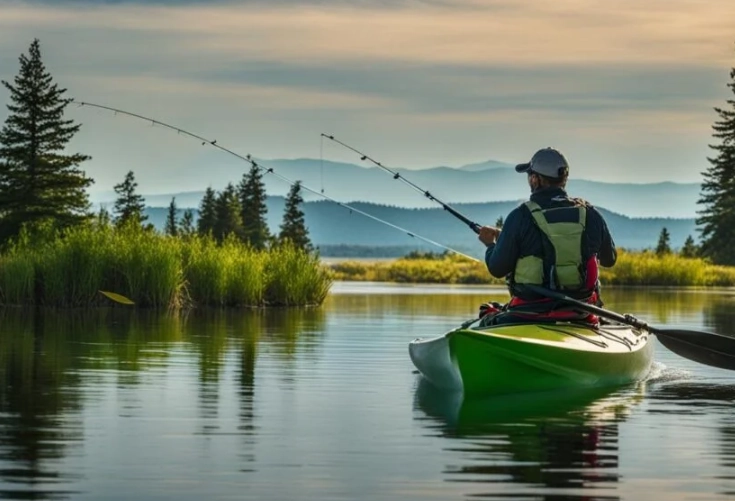
Answers to Questions You Might Be Hesitant to Ask
Look, the bottom line is this. Fishing is supposed to be fun. It's an escape. Following these unwritten rules of fishing etiquette removes friction, reduces stress, and makes the whole experience better for you and everyone around you. It makes you a steward of the sport, not just a consumer of it.
You'll catch more fish because you'll be more mindful. You'll have fewer conflicts. And you'll be able to look at yourself in the mirror knowing you did right by the resource and your fellow anglers. That's a good day, regardless of what's in the cooler.
Now go out there, give people some space, handle fish with care, and just be cool. The water's waiting.