Campfire Fish Recipes: The Ultimate Guide to Grilling Fish Over an Open Fire
Ever wondered how to cook fish over a campfire without it falling apart or tasting bland? This ultimate guide covers everything from choosing the right fish and essential tools to foolproof techniques and delicious, easy campfire fish recipes that will impress everyone on your next outdoor adventure.
Quick Guide
- Why Bother with Campfire Fish Recipes Anyway?
- The Non-Negotiable Foundation: Prep & Gear
- Mastering the Methods: Your Campfire Fish Recipe Toolkit
- Can't-Fail Campfire Fish Recipes to Try Immediately
- Safety & Cleanup: The Responsible Part
- Your Campfire Fish Recipe Questions, Answered
- Wrapping It Up: Your Next Steps
Let's be honest. Hot dogs and burgers are fine, but there's something almost magical about pulling a perfectly cooked, smoky piece of fish off a campfire grill. The flavor is impossible to replicate in a kitchen. It tastes like adventure. But if you've ever tried it and ended up with a fish carcass welded to the grate or a bland, dry fillet, you know it can be tricky. It doesn't have to be.
I've ruined my share of trout, believe me. That's how I learned what actually works.
This isn't just a list of recipes. It's the full playbook. We're going to talk about why campfire fish recipes are worth the effort, what you absolutely need to have, the best fish to pick (and which ones to avoid), and then dive into the techniques that make the difference between a mess and a masterpiece. By the end, you'll be looking for excuses to go camping just to cook dinner.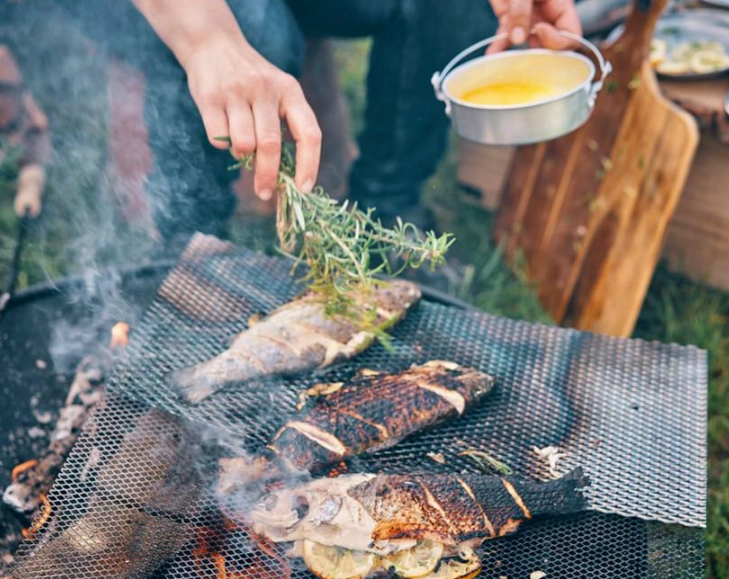
Why Bother with Campfire Fish Recipes Anyway?
You could just pack a sandwich. So why go through the hassle?
First, the flavor is unbeatable. Wood smoke, especially from hardwoods like oak or maple, adds a subtle, complex layer that gas or charcoal just can't match. It's a gentle perfume, not an overpowering punch. Second, it's incredibly satisfying. There's a primal connection between cooking your food directly over a fire you built and the meal you eat. It feels earned. Finally, fish cooks fast. After a long day of hiking or paddling, you don't want to wait hours for a stew to simmer. A good campfire fish recipe can have you eating in 20 minutes flat.
The Non-Negotiable Foundation: Prep & Gear
Jumping straight to the recipes is a mistake. The work you do before the fish ever hits the heat determines everything. This is the boring but critical part.
Choosing Your Fish: The Campfire Champion's Circle
Not all fish are created equal for the open flame. You want fish that are forgiving, flavorful, and sturdy enough to handle the variable heat. Here’s the breakdown.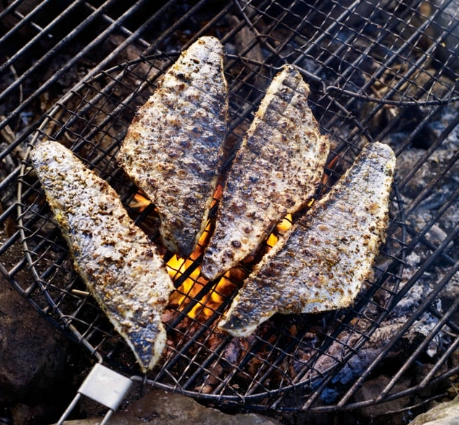
| Fish Type | Why It's Great for Campfires | Flavor & Texture | Best Cooking Method | My Personal Take |
|---|---|---|---|---|
| Trout (Rainbow, Brook) | The classic for a reason. Right size, holds together well, often available cleaned near fishing spots. | Mild, slightly nutty. Moist, flaky flesh. | Whole, on a grill or in foil. Also great stuffed. | My top pick for beginners. Forgiving and delicious. |
| Salmon (Fillets or Steaks) | High fat content = hard to dry out. Rich flavor stands up to smoke. | Rich, buttery, and robust. Firm texture. | Direct on grill (skin-on), foil packets, or on a plank. | Almost foolproof. The fat keeps it juicy even if you overcook a bit. |
| Catfish Fillets | Dense, meaty texture that doesn't fall apart easily. | Mild, sweet flavor. Holds seasoning beautifully. | Direct grilling, best with a fish basket or in foil. | Underrated. Holds up better than flakier white fish on a grate. |
| Red Snapper/Sea Bass (Whole) | Sturdy skin that crisps beautifully. Impressive presentation. | Sweet, mild, and lean with large, firm flakes. | Whole, scored, and grilled directly. Needs careful heat management. | A bit more advanced, but the crispy skin is a game-changer. |
| Tilapia or Cod Fillets | Readily available, affordable, and mild-tasting. | Very mild, flaky, and lean. | Foil packets ONLY. Too delicate for direct grilling. | Good for picky eaters, but the packet method is mandatory. |
See a pattern? Fat and firmness are your friends.
Avoid super thin, delicate fillets like sole for direct heat—they'll turn to dust. And for sustainability, it's always worth a quick check on sources. I often consult the Monterey Bay Aquarium Seafood Watch guide, even when planning a camping trip, to make better choices.
Gear You Actually Need (And What's Just Nice to Have)
You don't need a gourmet kitchen on wheels. But a few key tools are the difference between struggle and success.
The Must-Haves:
- Long-Handled Tongs & Spatula: Your fingers will thank you. Metal, not plastic.
- Heavy-Duty Aluminum Foil: The workhorse of campfire cooking. Get the wide, heavy-duty roll.
- Grill Grate: Either the one provided at the campsite (clean it first with fire and a wire brush!) or a portable campfire grill that sits over the logs.
- Instant-Read Thermometer: This is the single best way to beat guesswork. Fish is done at 145°F (63°C) in the thickest part. Trust the number, not just the clock.
- Oil & Brush: A high-smoke-point oil like avocado, grapeseed, or even plain vegetable oil for greasing the grate or the fish itself.
The Nice-to-Haves:
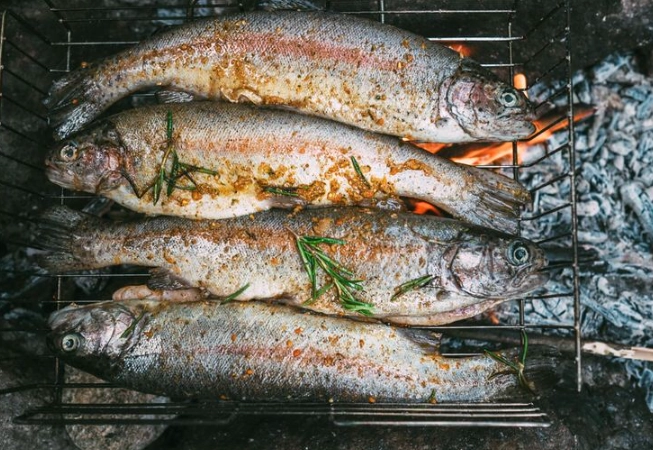
- Fish Basket: A hinged wire basket that clamps around the fish. It lets you flip the whole thing without the fish sticking or breaking. A game-changer for whole fish or delicate fillets.
- Cedar Planks: Soak them in water for an hour before you go. They steam and smoke the fish, adding incredible flavor and making it nearly impossible to burn. Perfect for salmon.
- Cast Iron Skillet: If you're car camping and don't mind the weight, it offers incredible, even heat for pan-searing fillets right in the coals.
Building the Right Fire: It's Not Just a Pile of Flames
This is where most campfire fish recipes fail before they even start. You don't cook over licking yellow flames. You cook over steady, glowing embers—what we call “coals.”
Start your fire at least 45 minutes before you plan to cook. Let the logs burn down until you have a bed of hot, ash-covered coals. You should be able to hold your hand about 6 inches above the grill grate for 4-5 seconds (be careful!). That's a medium-high heat. You can push coals together for a hotter zone or spread them out for cooler, indirect heat.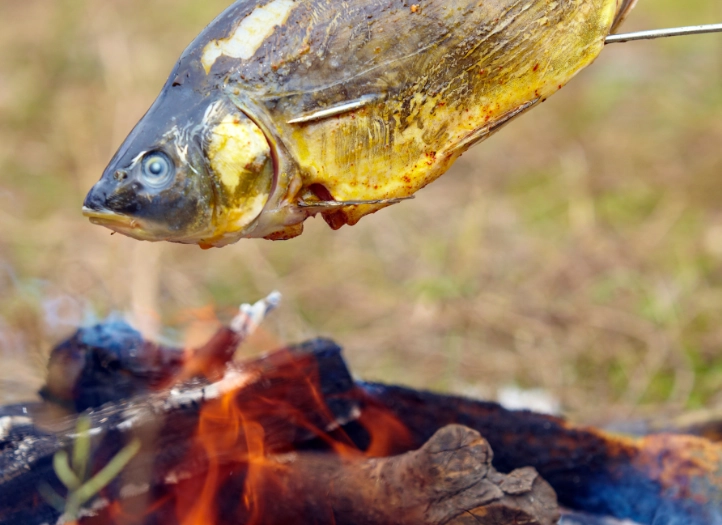
Mastering the Methods: Your Campfire Fish Recipe Toolkit
Once your fire is ready and your fish is prepped, you have three main paths. Each has its own personality and best uses.
Method 1: Direct Grilling (The Classic)
This is the iconic image: fish sizzling directly on a grill over the coals. It gives you those beautiful grill marks and crispy skin.
Best for: Whole fish (trout, snapper), sturdy skin-on fillets (salmon, catfish).
The Key: A CLEAN and WELL-OILED grate. Seriously, oil the grate, not just the fish. Let the grate get hot before putting the fish on. Place the fish skin-side down first if it has skin. Don't move it! Let it sear and release naturally, which usually takes 3-4 minutes. If you try to pry it up early, you'll lose the skin. Flip only once, and cook until the thermometer reads 145°F.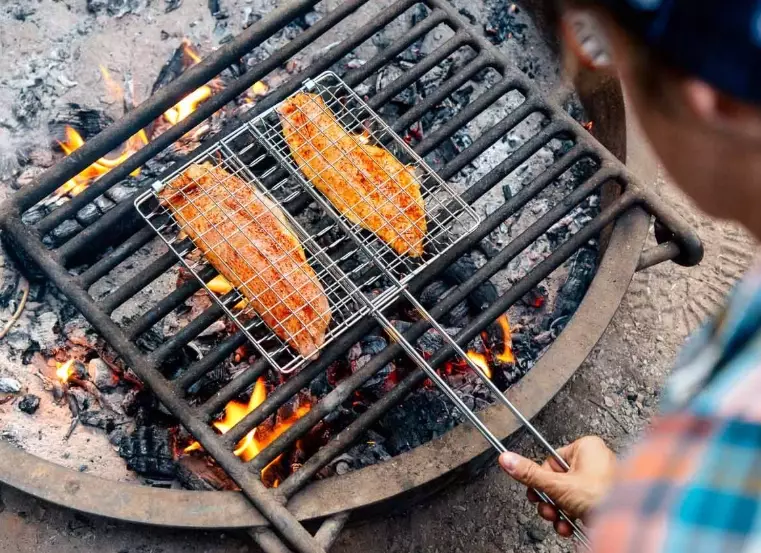
Method 2: The Foil Packet (Hobo Pack)
The ultimate easy, no-mess, no-stick solution. You create a sealed pouch with the fish, veggies, and seasonings, and let it steam in its own juices.
Best for: Any fillet (especially delicate ones like tilapia), and for meals where you want zero cleanup.
The Key: Use heavy-duty foil and a double layer if your coals are very hot. Create a “pillow” of space so the steam can circulate. Seal the packet tightly. Place it right on hot coals or on the grill grate. Cook time is usually 12-18 minutes, depending on thickness. The packet will puff up. Open carefully—steam burns!
This method is why foil packet campfire fish recipes are so popular. They're idiot-proof and pack a ton of flavor. You can throw in sliced potatoes, zucchini, bell peppers, and lemon slices with the fish for a complete meal.
Method 3: The Plank (For Flavor Fanatics)
Soak a cedar, alder, or maple plank in water for 1-2 hours. Place the seasoned fish on the damp plank and set the plank right on the grill grate over indirect heat (coals pushed to the side).
Best for: Salmon, steelhead trout, arctic char.
The Key: The plank will smolder and smoke, infusing the fish with a gorgeous woody aroma. It acts as a buffer, preventing burning. Keep a spray bottle of water handy in case the plank ignites (just a quick spritz).
Can't-Fail Campfire Fish Recipes to Try Immediately
Let's put it all together. Here are two foundational recipes that cover different methods. Use them as templates and get creative.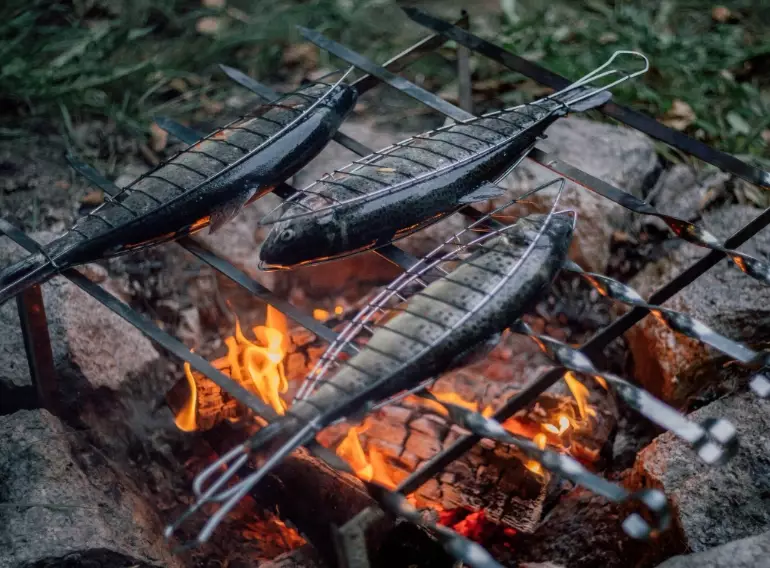
Recipe 1: The Ultimate Lemon-Herb Foil Packet Salmon
This is my go-to “I want an amazing meal with five minutes of prep” recipe. Serves 2.
What You'll Need:
- 2 skin-on salmon fillets (6 oz each)
- 1 lemon, thinly sliced
- 1 small zucchini, sliced into half-moons
- 1/2 red onion, thinly sliced
- 2 tbsp olive oil
- Salt, pepper, and dried dill (or 2 tbsp fresh)
- Heavy-duty aluminum foil
What You'll Do:
- Build a bed of hot coals.
- Tear off two large sheets of foil (about 18 inches each). Place one on top of the other for strength.
- In the center, pile the zucchini and red onion. Drizzle with a little oil and season.
- Place the salmon fillets skin-side down on top of the veggies. Top each with lemon slices, a drizzle of oil, and a generous pinch of dill, salt, and pepper.
- Bring the long sides of the foil together, fold over tightly twice to seal. Then roll up the ends to create a sealed packet. Leave some airspace inside.
- Place the packet directly onto hot coals or on the grill grate. Cook for 14-16 minutes.
- Remove carefully, open the packet (mind the steam!), and check for doneness (flaky, 145°F).
Why it works: The veggies steam and create a flavorful base, keeping the salmon incredibly moist. The lemon perfumes everything. Cleanup? Just ball up the foil.
See? Simple. The foil packet is the secret weapon of easy campfire fish recipes.
Recipe 2: Simple Grilled Whole Trout with Campfire Butter
The classic, done right. Impressive and simple. Serves 2.
What You'll Need:
- 2 whole trout, cleaned and scaled (about 12 oz each)
- 2 tbsp softened butter
- 1 clove garlic, minced (or 1/2 tsp garlic powder)
- 1 tbsp fresh parsley, chopped (optional)
- Salt and pepper
- Oil for the grate
- Lemon wedges for serving
What You'll Do:
- Ensure your fire has burned down to a bed of medium-hot coals.
- Mix the softened butter with garlic and parsley (if using). Set aside.
- Pat the trout completely dry inside and out. Season the cavity and outside generously with salt and pepper.
- Let your grill grate get screaming hot over the coals. Oil it thoroughly with a folded paper towel dipped in oil, using your long tongs.
- Place the trout directly on the hot, oiled grate. Cook for 4-5 minutes without moving it, until the skin releases easily.
- Carefully flip and cook for another 3-4 minutes on the other side, or until the flesh at the thickest part is opaque and flakes easily (145°F).
- Transfer to a plate and immediately top each trout with a dollop of the garlic-herb butter. It will melt into the hot fish. Serve with lemon wedges.
Why it works: The hot, oiled grate gives you crispy, intact skin. The compound butter melts into a simple, rich sauce. It tastes like you're a professional camp chef.
Safety & Cleanup: The Responsible Part
Great campfire fish recipes come with responsibility.
Food Safety: Keep fish cold (below 40°F) until ready to cook. Use a good cooler with ice blocks. Cook to 145°F internal temperature. The FDA's guidelines on seafood safety are a good baseline for handling.
Fire Safety: We covered it, but it bears repeating. Drown your fire with WATER, not dirt, until it's cold to the touch. Stir the ashes. Feel for heat. If it's too hot to touch, it's too hot to leave.
Leave No Trace: Pack out all your trash, including used foil (let it cool, ball it up). Never pour grease or food scraps into a lake or stream. Dispose of fish guts properly, far from campsites and water sources, or in designated disposal bins.
Your Campfire Fish Recipe Questions, Answered
I get asked these all the time. Let's clear them up.
Wrapping It Up: Your Next Steps
Campfire fish recipes aren't about perfection. They're about the experience—the smell of the smoke, the sound of the sizzle, the shared meal under a darkening sky. Start simple. Maybe try the foil packet salmon first. Get comfortable with your fire. Then graduate to a whole grilled trout.
The goal isn't just to cook food. It's to create a moment. A memory. And honestly, a meal that beats any fancy restaurant when you're out there in the woods.
Now go build a fire. I'm hungry just thinking about it.