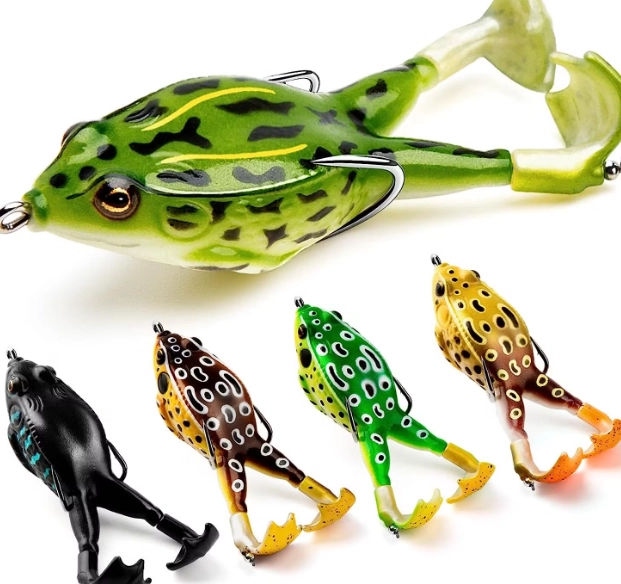
Artificial Fishing Bait Names: The Secret Code to Catching More Fish
Ever wonder what those weird names on fishing lures mean? This guide decodes artificial bait names to help you choose the right lure for every condition and catch more fish.
You're standing in the tackle aisle, staring at a wall of plastic and metal. The names shout at you: ChatterBait, Senko, Deep Diver Magnum, Whopper Plopper. It sounds like a cartoon character roster, not a serious fishing tool list. I used to grab whatever looked cool. Then I spent a frustrating morning throwing a "Super Fluke" in deep water while the bass were chasing shad near the surface. The lure was great—I was using it all wrong. The name held the clue I missed. Artificial fishing bait names aren't random marketing fluff. They're a condensed language, a quick-reference guide written by the designers to tell you exactly what the lure does, what it imitates, and where it shines. Learning this language is the fastest way to stop guessing and start catching. Think of a classic lure name: "Rattlin' Rapala Deep Diver." Let's dissect it. Not every name has all three parts, but the best ones give you at least two. Your job is to become fluent in the vocabulary of each category. This is the most important part of the name. It describes how the lure moves or attracts. See the pattern? The action word sets your retrieval style before you even tie it on. A "Jerkbait" demands sharp pulls. A "Crankbait" asks for a steady reel. This part tells you what the lure is trying to look like. It's about matching the hatch. Names with Minnow, Shad, Herring, Alewife, Smelt. These are often slender, forage-shaped lures. A "Shad Rap" has a distinct, tall-bodied profile that mimics gizzard or threadfin shad. If you see birds diving on shad, this is your clue. Words like Craw, Crawdad, Crab, Lizard. These are bottom-oriented, often with claws, legs, or a dragging action. They're not fast-moving. A "Baby Craw" suggests a smaller, snack-sized presentation perfect for finesse situations. Some legendary lures have names that don't directly describe prey: Senko, Ned Rig, Whopper Plopper. These have become categories themselves. "Senko" now implies a weightless, slow-falling stickbait with a unique dying quiver. The name became the standard. This is the logistical data in the name. It tells you where to deploy it. I learned the depth lesson the hard way. I threw a "Suspending Rogue" like a crankbait, reeling non-stop. It swam fine but caught nothing. The magic of a suspending lure is the pause. The name told me, but I wasn't listening. Let's make it actionable. Next time you're prepping for a trip or in the tackle shop, run through this checklist based on the names. Step 1: Assess Conditions. Look at the water. Clear? Stained? Muddy? Is it deep offshore or shallow flats? Step 2: Pick Your Action (The Name's First Clue). Step 3: Match the Prey Profile. What's the main forage? Bluegill? Look for a broader profile. Shad? Look for "Shad" in the name. Crawfish? You want "Craw." Step 4: Lock in the Depth. This is where you avoid my mistake. Fishing a 20-foot ledge? You need "Deep Diver" or a "Drop" shot. Flipping shallow docks? "Shallow" or "Squarebill" is your friend. Example: Fishing a stained-water river for smallmouth in summer. After years of guide trips and tournaments, here’s what I see people get wrong. The Brand-Name Blind Spot: Don't just buy "a Senko." Understand why it works—the weightless fall and quiver. Then you can find other lures with similar action descriptors ("wacky rig," "slow sink") that might work better in certain situations. The original created a category; learn the category's traits. Ignoring the Implied Retrieve: A "Twitchbait" demands twitches. A "Crankbait" demands cranking. The most common error is using the wrong retrieve for the lure's named action. You'll catch fish sometimes, but you're not using its designed strength. Overcomplicating Color Before Action: Anglers spend 20 minutes choosing between "Green Pumpkin" and "Watermelon Red Flake" but ignore that they're throwing a "Deep Diver" in 3 feet of water. Get the action and depth right first. Color is a fine-tuner. My personal rule? If I'm not catching fish, I change the action type (by looking for a different keyword in my box) before I change the specific lure or color. Go from a "Crank" to a "Chatter." From a "Swimbait" to a "Jerkbait." The name guides that pivot. So next time you see a "Z-Man ChatterBait Jack Hammer," you'll see more than a cool name. You'll see a vibration-based (Chatter) lure that's a premium (Jack Hammer, a specific model name implying quality) bladed jig. The code is broken. Your time in the tackle aisle just got shorter, and your time catching fish is about to get longer.What’s Inside This Guide
The Three-Part Breakdown of Every Bait Name
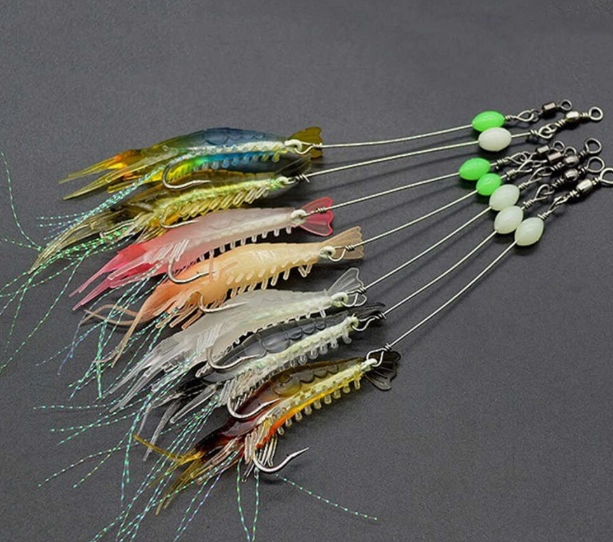
Action Words: The Engine of the Lure
Name Keyword
What It Means
Best For
Chatter, Vibrating, Bladed
High-frequency vibration from a metal blade. Aggressive, wide search lure.
Stirring up reaction strikes in stained water, covering water fast.
Jerk, Twitch, Slash
Erratic, darting action controlled by your rod tip. Imitates a wounded baitfish.
Clear water, sight-feeding predators like bass and pike.
Crank
A steady, wobbling retrieve. The lip design dictates the wobble width and depth.
Searching depth zones, triggering fish following a steady prey.
Spin, Spinner
Flashing blade(s) that rotate around a wire arm. Visual and vibrational attraction.
Murky water, low-light conditions, attracting fish from a distance.
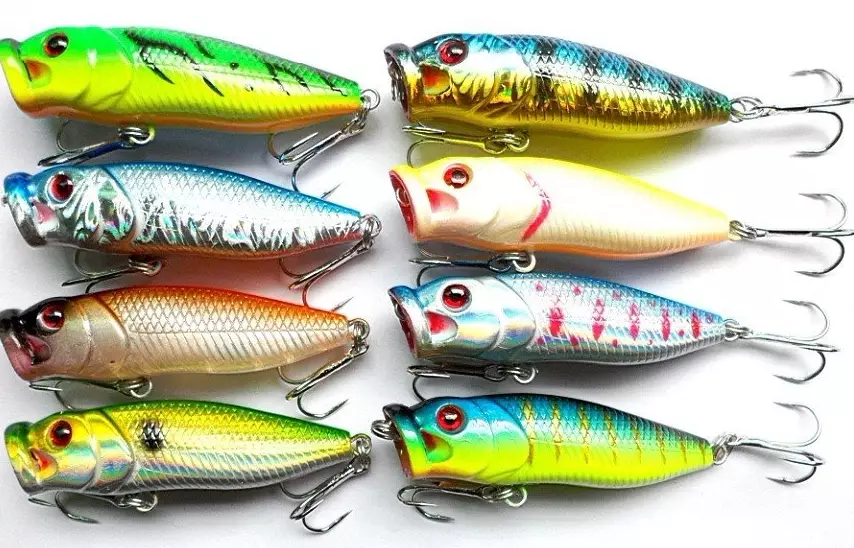
Plopper, Chug, Popper
Surface commotion—gurgles, pops, splashes. Topwater excitement.
Dawn/dusk, aggressive fish near cover. Heart-stopping strikes.
Swim, Paddle, Grub
A steady, swimming tail action. Lifelike swimming motion.
Imitating healthy, fleeing baitfish or foraging crawfish.
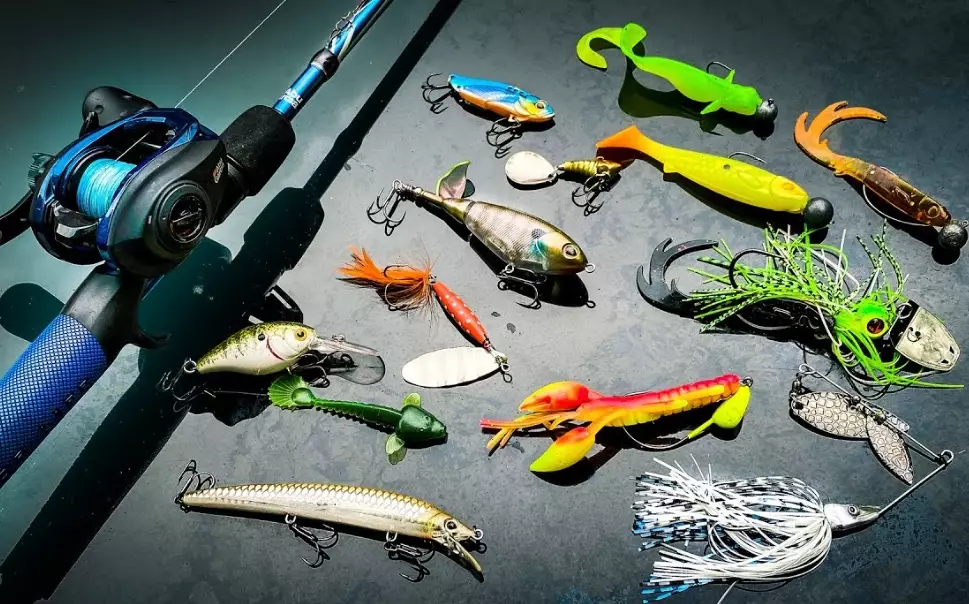
Prey & Profile Words: What Are You Serving?
Baitfish Imitators
Crustacean & Bottom Critters
The Abstract Winners
Depth & Condition Words: Where Does It Work?
How to Choose: A Practical Decision Guide
- Murky water/Low light: Look for Chatter, Spin, Rattlin'.
- Clear water/High pressure: Look for Jerk, Finesse, Swim.
- Aggressive topwater bite: Look for Plopper, Popper.
- Searching a depth zone: Look for Crank, Diver.
1. Conditions: Stained, moderate current.
2. Action: Need vibration/sound. I'm looking at lures with Chatter or Spin in the name.
3. Prey: River smallmouth eat crayfish and minnows. A "ChatterCraw" or a "Spinnerbait" with a minnow-style trailer fits.
4. Depth: River is 5-8 feet deep. I'll avoid "Deep Diver" and maybe choose a "Mid-Diver" or one with no depth modifier, as many chatterbaits run in that range.Pro Tips & Common Mistakes to Avoid